
How Much Does It Cost to Charge an Electric Car at Home?
The Short Answer
The cost to charge an electric car at home is the energy your car takes in, multiplied by the unit rate you pay, plus a small loss between the socket and the battery. Four numbers decide it: energy used, unit rate, time of day and losses. Our EV Charging Calculator does the sum with your figures.
How do you work out what it costs to charge an electric car at home?
Multiply the kilowatt hours (kWh) that go into your car by the unit rate on your electricity tariff, then allow a little extra for charging losses. You need four inputs, and you can find all of them at home.
- The energy your car takes in, which follows the miles you drive.
- The unit rate on your tariff, shown on your bill or in your supplier's app.
- The time of day you charge, because some tariffs have a cheaper window.
- The losses between the wall and the battery.
We do not publish pence per kWh figures here, because tariff rates change and yours depends on your supplier. Put your own rate into the calculator and it handles the arithmetic.

How much electricity does an electric car need?
An electric car needs the energy you used driving, plus a little more for losses. A driver who covers short commutes refills a small amount each night. A driver who empties the battery on a long run refills the whole battery. Miles driven set the figure, not the charger.
Your car's handbook gives the battery capacity and the efficiency you can expect. Take your typical weekly miles, work out the energy for them, and that becomes the first input in the calculator. Check a week of real driving rather than your best guess, because winter journeys usually take more energy than summer ones.
Which unit rate do you pay to charge at home?
You pay the unit rate on your home electricity tariff, the same one that runs your kettle. Look for it on your latest bill or in your supplier's app, and note whether your tariff has more than one rate across the day. That second detail matters more for an EV than for most appliances.
A standard tariff charges one rate all day. A time-of-use tariff, such as an overnight EV tariff, gives a cheaper rate in set hours. Intelligent Octopus Go, Octopus Go and Octopus Agile are separate tariffs with their own rules, so use the exact name when you look up compatibility.
Does the time of day change what a charge costs?
The time of day changes the cost whenever your tariff has a cheaper window. A car plugged in at six in the evening on a basic charger starts straight away at the daytime rate. A smart charger can hold the session back until the cheaper rate starts.
That is the one place a smart charger earns its keep on cost. It moves the same energy into a cheaper slot. It does not reduce the energy the car needs. If your tariff has one flat rate all day, scheduling makes no difference to the bill.

We cover how to match a charger to a tariff in Smart Charger for a Cheap Night Tariff: What to Check Before You Buy.
Why does charging cost more than the energy in the battery?
Charging costs more than the energy stored because some energy is lost as heat in the charger, the cable and the car's own charging electronics. You pay for what leaves the meter, and the battery receives slightly less. The calculator includes an allowance for this, so you do not need to guess.
The loss is small next to the effect of your unit rate, so do not chase it first. Pick the rate and the time of day before you worry about the last few percent.
Does a faster charger cost more to run?
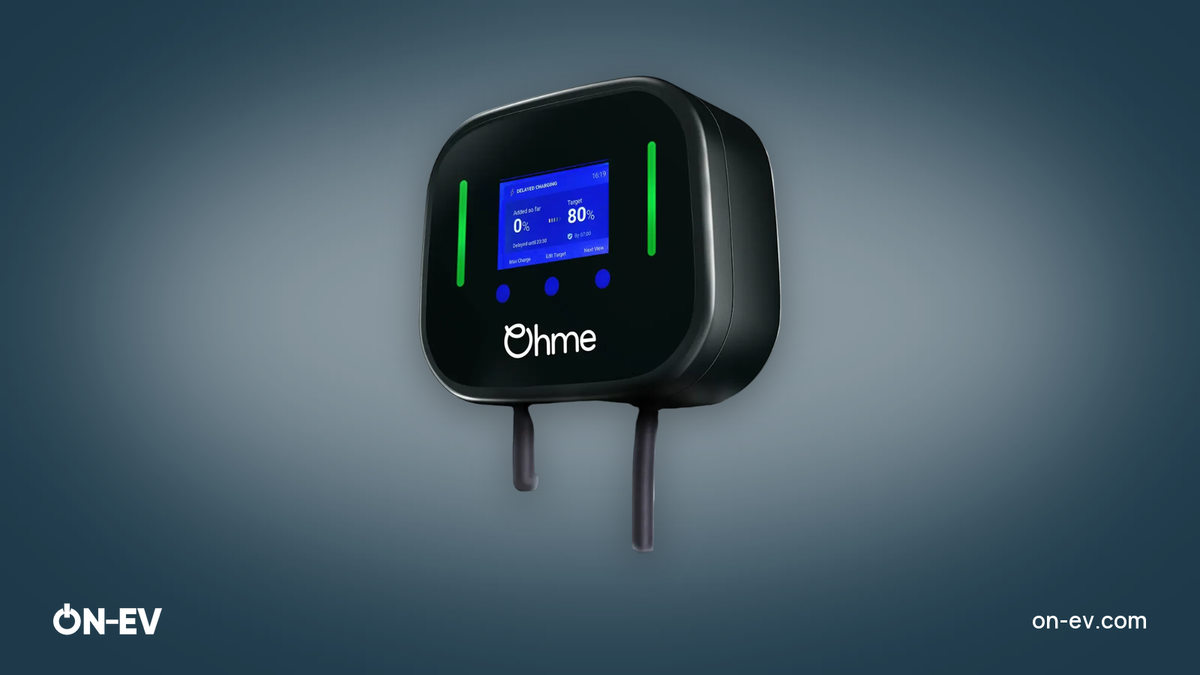
A faster charger does not cost more per mile. Charger power sets how quickly the energy goes in, not how much goes in. The Ohme Home Pro's 7.4kW / 32A output adds approximately 30 miles of range per hour, so a car that needs the same miles gets them sooner, at the same unit rate.
Speed matters for a different reason. A faster charger fits a charge into a short cheap window, such as a few hours overnight. If your window is long and your daily miles are low, a slower rate would also finish in time.
Which chargers suit off-peak charging?
The Ohme Home Pro and the Indra Smart PRO are two chargers that schedule charging for cheaper hours, and both are 7.4kW / 32A single phase. They suit different homes, so pick on the connection and the tariff you use. A qualified electrician fits either one.
| Charger | Price | Power | Connection | Tariffs named |
|---|---|---|---|---|
| Ohme Home Pro | 5m £532.00, 8m £658.00 | 7.4kW / 32A single phase | Built-in 3G/4G SIM | Octopus Intelligent Go, Octopus Go, Octopus Agile, British Gas Electric Driver |
| Indra Smart PRO | Untethered £414.00, tethered 6m £418.00 | 7.4kW / 32A single phase | Wi-Fi | Intelligent Octopus, OVO Charge Anytime and more |

Choose the Ohme Home Pro if the charger will sit out of reach of your router, since it uses its own SIM. Choose the Indra Smart PRO if your home Wi-Fi reaches the spot and you want to set off-peak windows in the Indra app. The Ohme Home Pro review goes deeper on the Ohme, and Choosing a Home EV Charger in 2026 covers the wider decision.
Ohme Home Pro
Indra Smart PRO
You can browse every option in our home chargers collection, or look at solar compatible chargers if you generate your own power.
Frequently Asked Questions
How much does it cost to charge an electric car at home?
It depends on the energy your car takes in and your unit rate. Enter your miles and your tariff rate into our EV Charging Calculator to get a figure for your own home.
Is it cheaper to charge at home overnight?
It is cheaper only if your tariff has a lower overnight rate and your car charges in that window. On a flat-rate tariff the time of day makes no difference.
Do I need a smart charger to use an off-peak tariff?
You need a way to start charging in the cheap hours. A smart charger does it by schedule or by following the tariff, so you do not have to plug in at the right moment.
Does the charger I buy change my electricity bill?
The charger changes the speed and the timing, not the energy the car needs. A smart charger can move a charge into a cheaper window if your tariff has one.